Wheel Aligners

Wheel Aligners

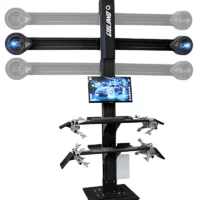
Balco was the name behind the world’s first 3D alignment machine. Whilst that is separated by over 40 years and a very different lineage, it is no surprise that, at Giuliano Automotive, we consider ourselves as a serious Wheel Alignment equipment company. Offering both CCD wheel aligners and ‘Camera & Target’ (3D)* technology within our range, we are able to satisfy all requirements to suit your own particular preferences or circumstances.

Call us today on 01733 920 440 to discuss your next wheel aligner.

Contact Us

Wheel Alignment, vehicle geometry, or ‘tracking’ – depending on your choice of terminology – is a crucial element of vehicle service maintenance, from safety, comfort, and economical points of view. The data provided by vehicle manufacturers is a crucial yardstick for ensuring all three of these key factors are met, and there is no question that in the modern garage workshop, a wheel aligner – or at least access to one – is a ‘must-have’ piece of equipment in order to offer a full service to your customers. Selling wheel alignment is easy, because most customers are educated as to the benefits, which include the life of the tyre, a smoother ride, less stress on steering and suspension components, and, of course, nowadays ensuring that Advanced Driver Assistance Systems (ADAS) function as they should. But as a business, there is another very real aspect to offering wheel alignment, and that is revenue and profit.

When you look around the workshop, there are few items of equipment that can compete with a wheel aligner, or ‘tracking machine’, for Return On Investment (ROI). Products like our Balco i-lign wheel aligner make the process so fast and simple that carrying out vehicle wheel alignment has never been more straightforward. When you take into account the time taken, the credibility it provides, the tangible results from a customer's perspective, and the charge you can justifiably make for the service, there is no doubt that alignment is hugely profitable.

What is also vitally important is that you receive the support to help you get the most out of your purchase. Anybody can import and sell a wheel aligner, but there aren't actually that many companies that can provide specialist, dedicated support to guarantee you get the right training, ongoing support, backup, and aftercare for a vehicle wheel alignment system. With dedicated wheel alignment specialists on the team, you can rest assured in the knowledge that, whichever product you choose, you will get the best from your aligner.

At Giuliano Automotive UK, we believe in the old saying ‘the proof of the pudding is in the eating’, and so we would encourage you to ask for a demonstration on any of our wheel aligner products before making a decision. There are many types and manufacturers of wheel alignment systems, and not all may be right for you. Ask us for a free, no-obligation demonstration and see firsthand the knowledge and level of product and service we are able to provide.

*New 3D aligner coming Summer 2026

For any questions or advice on choosing the correct wheel alignment equipment for your workshop, please give us a call on 01733 920 440.  Or if you are ready to order, we are standing by to take your call.

Book a Wheel Aligner Demo

Common Questions About Wheel Aligners

Investing in professional wheel alignment equipment is one of the most effective ways for a UK garage to increase its service revenue and improve customer retention. With the UK's challenging road conditions, ranging from potholes to uneven rural roads, the demand for precision tracking and full four-wheel alignment is constant.

Whether you are looking for a portable laser system for a mobile van or a high-accuracy 3D or CCD wheel aligner for a high-volume MOT centre, choosing the right technology is key. Below, we answer the most frequent questions from garage owners to help you select the best equipment for your business needs.

Frequently Asked Questions

UK garages typically choose between CCD (Charged-Coupled Device) and 3D alignment technology. CCD machines use electronic sensors on each wheel that communicate with one another via Bluetooth, Zigbee, or infrared. They are highly versatile because they do not require a fixed "tower" at the front of the lift, making them ideal for smaller workshops with limited space or those using 2-post lifts. 3D Wheel Aligners  are a totally different concept, using high-resolution cameras mounted on a tower to recognise passive targets attached to the wheels. They are generally faster for high-volume tyre shops and have fewer electronic components on the wheels themselves, reducing the risk of drop damage. However, they usually require a dedicated, level alignment bay and more space.

These two types of system make up the mainstay of the machines sold in the UK, but at either end of the spectrum you also have the older style laser units. Laser aligners were huge back in the day, and many a technician today will was lyrical about their ‘old Supertracker’ or Balcolign. However, today they are largely a bit dated, and most notably don’t tend to be able to provide the convenience of a database or printout. Contrasting this, there is a growing interest in Touchless or ‘drive-through’ alignment systems. As the description suggests, they are far more automatic, and they have their place, albeit probably not in the realms of the everyday workshop!

Ultimately, wheel alignment, the correct product and the best practise in use, is a very subjective thing. If you have ever sat in a room with alignment ‘boffins’ arguing about the benefits or drawbacks or roll-back or 3 or 4 point clamps, you would know what we mean. At Giuliano UK, we really don’t over complicate it. You want a reliable product, from a company you can rely on, and we can provide exactly that.

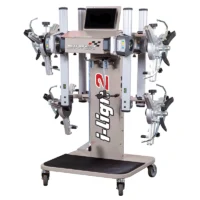
When we get asked this question, we find it actually needs qualifying a bit further. ‘Small’ can refer to actual space availability, or it can also be used to describe someone’s garage that has never done alignment before, and doesn’t see it as being a major part of the offering.

Both of these can actually receive largely the same answer, and that is that the i-Lign ticks a lot of boxes. Compact, reasonably priced, yet incredibly well spec’d, this unit will satisfy 80% of our enquiries, so for anybody limited on space, looking to invest in alignment for first time, or maybe upgrade from a laser system, we would strongly recommend the i-Lign.

CCD is the logical step up from laser. The question is not so much about accuracy between the 2 units, but more about practicality, capability and, in simple terms, being ‘more 21st century’. The laser system concept is now 40 years old, and so CCD is widely accepted as the basis for todays alignment offering.

Yes you can, but whilst a 4 post alignment lift with integral turn plates is the gold standard, many independent garages use CCD systems to perform alignment on 2 post lifts. To do this accurately, you must use alignment tables or turning plates to allow the wheels to move freely under the vehicles weight, and the aligner must have a ‘Freeze’ or ‘Jack Hold’ function, allowing you to lift the vehicle for adjustment without losing the measurement data.

Wheel alignment is one of the highest-margin services in the automotive industry. A typical 4-wheel alignment in the UK averages between £45 and £85, or more, depending on your location, the vehicle type and the type of garage, as specialists may charge more. But typically speaking, if your workshop performs just two alignments a day, five days a week, you can generate over £20,000 in additional annual revenue. So most mid-range CCD or laser systems pay for themselves within 6 to 12 months.